

UN Sustainable Development Goals and Infection Control: Scientific Strategies for Safer and Greener Healthcare
Introduction
Infection prevention and control is one of the most important components of patient safety, healthcare quality, and public health. As healthcare services expand and the use of medical devices increases, managing infection-related risks has become a fundamental priority for hospitals and healthcare organizations worldwide.
Today, infection prevention extends beyond sterilizing medical instruments and maintaining hand hygiene. Access to safe water, healthcare waste management, environmental cleaning, responsible use of disposable medical devices, and the reduction of environmental pollution are also essential elements of comprehensive infection prevention and control programs.
These priorities are closely connected to the United Nations Sustainable Development Goals (UN SDGs).
The Sustainable Development Goals consist of 17 global objectives adopted by United Nations Member States in 2015 as part of the 2030 Agenda for Sustainable Development. They address health, education, clean water, responsible consumption, environmental protection, and sustainable development.
Within healthcare systems, achieving these goals requires effective Infection Prevention and Control (IPC) practices.
The World Health Organization (WHO) recognizes infection prevention and control as a critical component of patient safety, healthcare quality, and efforts to address antimicrobial resistance.
This article examines the relationship between the UN Sustainable Development Goals and infection control, explores the importance of medical devices and healthcare waste management, and presents practical strategies for developing safer and more environmentally sustainable healthcare facilities.
What Are the United Nations Sustainable Development Goals (UN SDGs)?
The United Nations Sustainable Development Goals are a collection of 17 interconnected global objectives designed to improve human well-being, reduce inequalities, protect natural resources, and promote sustainable development by 2030.
These goals recognize that economic development, public health, environmental protection, and social progress are closely connected.
In healthcare, sustainability involves more than delivering effective medical treatments.
A sustainable healthcare facility must also protect patients and healthcare workers from preventable infections, manage resources responsibly, and minimize unnecessary environmental impacts.
Several SDGs are particularly relevant to healthcare infection prevention and medical device management.
SDG 3: Good Health and Well-Being
SDG 3 aims to ensure healthy lives and promote well-being for people of all ages.
Preventing healthcare-associated infections, improving patient safety, and strengthening healthcare quality directly contribute to this objective.
Target 3.8, which addresses universal health coverage and access to quality essential healthcare services, is especially relevant.
Effective infection control helps healthcare facilities provide safer services while reducing preventable complications.
SDG 6: Clean Water and Sanitation
SDG 6 focuses on ensuring access to safe water, sanitation, and sustainable water management.
Healthcare facilities depend on reliable water supplies for hand hygiene, environmental cleaning, equipment reprocessing, and numerous clinical procedures.
Insufficient water and sanitation infrastructure can significantly undermine infection prevention practices.
SDG 12: Responsible Consumption and Production
SDG 12 promotes sustainable consumption, efficient resource use, and responsible waste management.
Within the medical device industry, this goal is relevant to manufacturing efficiency, packaging optimization, waste reduction, and the responsible management of healthcare consumables.
SDG 13: Climate Action
SDG 13 emphasizes the need to address climate change and its impacts.
Healthcare organizations can contribute through improved energy efficiency, responsible procurement, and environmental management.
However, claims about reduced greenhouse gas emissions should be supported by appropriate measurements or validated environmental assessments.
What Is Infection Prevention and Control (IPC)?
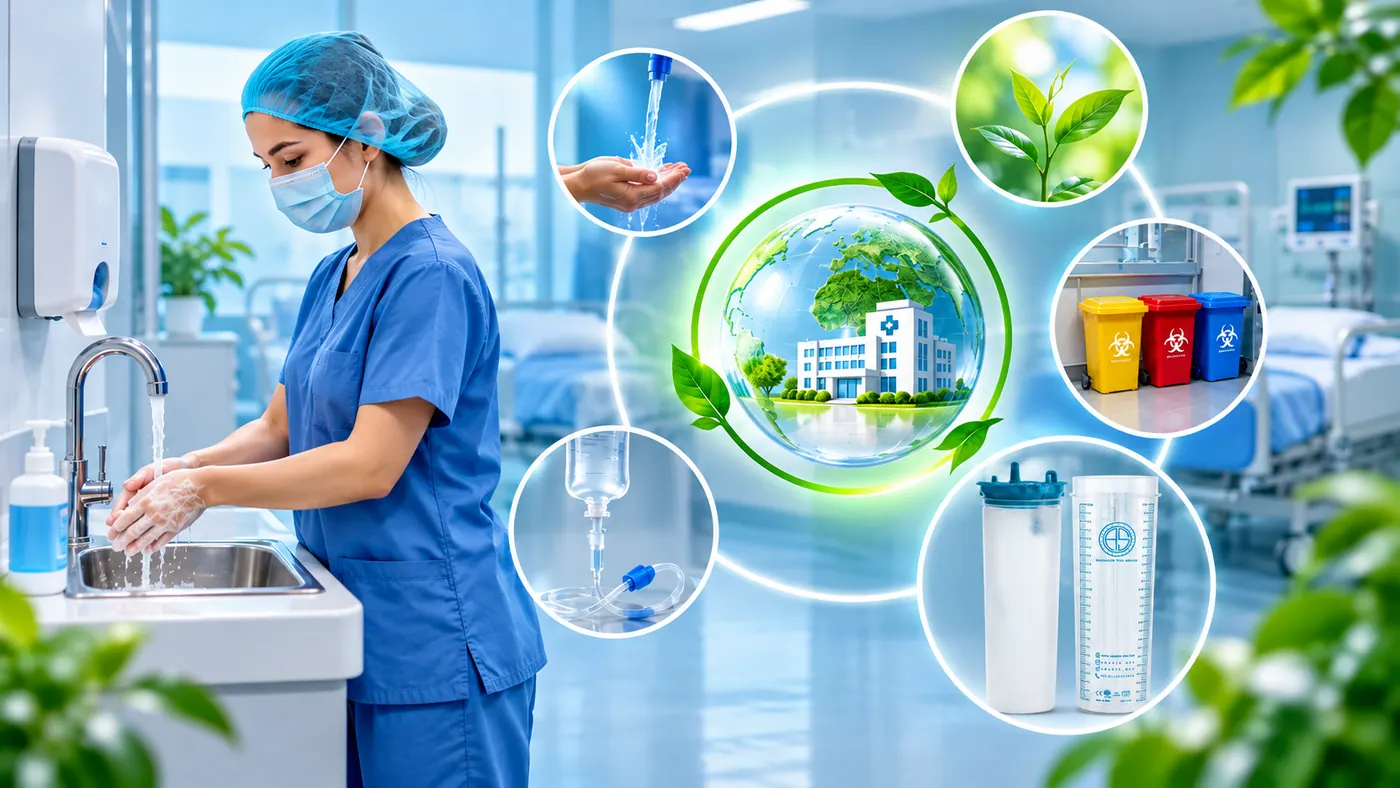
Infection Prevention and Control refers to evidence-based policies, procedures, and practices designed to prevent the transmission of infectious agents among patients, healthcare workers, and other individuals in healthcare environments.
IPC programs typically include:
- Hand hygiene and appropriate personal protective equipment.
- Aseptic techniques during medical procedures.
- Cleaning, disinfection, and sterilization practices.
- Safe injection and medical device handling.
- Healthcare waste segregation and disposal.
- Environmental cleaning and monitoring.
- Surveillance of healthcare-associated infections.
One of the major concerns addressed by IPC programs is Healthcare-Associated Infections (HAIs).
HAIs are infections associated with receiving healthcare services that may develop during or after treatment.
Examples include surgical site infections, catheter-associated bloodstream infections, catheter-associated urinary tract infections, and certain healthcare-associated respiratory infections.
According to the WHO Global Report on Infection Prevention and Control 2024, healthcare-associated infections remain a significant challenge worldwide, contributing to patient harm, increased healthcare costs, and antimicrobial resistance [1].
Effective infection prevention programs can reduce many preventable infections through systematic implementation of evidence-based measures.
How Are Infection Control and Sustainable Development Connected?
Infection prevention and sustainable development are closely related because environmental conditions directly influence the safety of healthcare services.
For example, a hospital without reliable access to clean water may struggle to maintain appropriate hand hygiene and environmental cleaning practices.
Similarly, inadequate healthcare waste management can increase occupational exposure to contaminated materials and create environmental hazards.
Therefore, infection prevention strategies should consider both human health and environmental protection.
This relationship can be understood through three major dimensions.
Patient Safety: Reducing the transmission of pathogens during healthcare delivery.
Healthcare Worker Safety: Minimizing occupational exposure to blood, bodily fluids, contaminated equipment, and hazardous waste.
Environmental Sustainability: Managing medical waste responsibly, reducing unnecessary resource consumption, and preventing environmental contamination.
Integrating these dimensions allows healthcare organizations to establish coordinated infection prevention and sustainability programs rather than implementing isolated measures.
Global Challenges in Healthcare Hygiene and Infection Prevention
Access to essential water, sanitation, hygiene, environmental cleaning, and waste management services is fundamental to effective infection prevention.
The WHO and UNICEF Joint Monitoring Programme report published in August 2026 evaluated progress in these services in healthcare facilities using data available through 2025 [2].
According to the report, estimated global coverage of basic water services in healthcare facilities reached 85%.
Basic sanitation services were available in approximately 72% of facilities, while basic healthcare waste management services reached 71%.
The estimated global coverage of basic environmental cleaning services was 59%.
These findings demonstrate that substantial gaps remain in the infrastructure required to support safe healthcare delivery.
Importantly, these figures measure access to specific services rather than the direct incidence of hospital-acquired infections.
Nevertheless, inadequate infrastructure can make effective infection prevention difficult to implement.
Strengthening water, sanitation, hygiene, environmental cleaning, and waste management services is therefore essential for progress toward the SDGs.
The Role of Medical Devices in Infection Prevention and Control
Medical devices are essential components of modern healthcare systems.
Devices used for fluid administration, surgical suction, drainage, respiratory support, and clinical procedures must be designed and used with appropriate safety considerations.
Their design can influence how healthcare workers interact with potentially contaminated materials.
For example, poorly designed connections may increase the risk of leakage, while inappropriate handling of contaminated fluid pathways may contribute to occupational exposure.
Conversely, suitably designed closed systems may reduce certain opportunities for direct contact with contaminated liquids.
However, a closed design alone does not guarantee infection prevention.
The actual performance of a device depends on its design, manufacturing quality, intended use, and compliance with validated procedures.
The Importance of Single-Use Medical Devices
Single-use medical devices are designed for a defined use and should be handled according to manufacturer instructions and applicable regulations.
In many applications, appropriately selected disposable devices eliminate the need for reprocessing the specific disposable component.
However, single-use products also generate healthcare waste.
Their selection should therefore consider patient safety, clinical performance, regulatory requirements, and environmental impacts.
Neither single-use nor reusable devices should automatically be considered environmentally superior without an appropriate assessment.
The Role of Medical Suction Systems in Contamination Management
Medical suction systems are commonly used in operating rooms, intensive care units, emergency departments, and other healthcare environments.
These systems assist in collecting blood, secretions, and other fluids from specified clinical locations.
Because collected fluids may contain infectious agents, minimizing leakage, preventing unnecessary contact, and ensuring safe handling are important considerations.
The performance of a suction system depends on several components, including suction tubing, collection containers, connectors, and protective filters.
Disposable Suction Liner Bags
Disposable suction liner bags are designed to collect medical fluids within compatible suction systems.
Depending on their design, these products may support the containment and handling of collected fluids.
Appropriate systems can potentially reduce certain manual fluid-handling steps.
However, such benefits depend on the specific product, system configuration, and correct use.
Infection prevention claims should be supported by relevant technical testing or clinical evidence.
Hydrophobic Filters
Hydrophobic filters are used in some suction systems to help prevent liquid from passing into designated downstream components.
Their performance depends on material properties, pore structure, operating pressure, and other design characteristics.
A hydrophobic filter should not automatically be considered an antimicrobial barrier unless the product has been appropriately tested and validated for that function.
These devices must be selected and used according to the manufacturer’s specifications.
Healthcare Waste Management: Connecting Infection Control and Environmental Sustainability
Healthcare waste management is one of the clearest links between infection prevention and sustainable development.
Medical activities generate a wide range of waste materials, including packaging, disposable equipment, contaminated dressings, sharps, chemical products, and biological materials.
According to the WHO healthcare waste fact sheet updated in October 2024, approximately 85% of healthcare waste is considered general, non-hazardous waste.
The remaining 15% may contain infectious, chemical, pharmaceutical, radioactive, or other hazardous materials [3].
These percentages represent general estimates. Actual waste composition varies according to healthcare facility type and clinical activity.
Effective segregation at the point of generation is essential.
When hazardous and non-hazardous waste are mixed, the amount of waste requiring specialized treatment may increase.
Improper segregation can also expose healthcare workers and waste management personnel to preventable risks.
Principles of Safe Healthcare Waste Management
Healthcare waste should be classified according to its hazards and applicable regulations.
Suitable collection containers must be selected for each waste category.
Sharps require puncture-resistant containers designed for safe disposal.
Waste transportation within healthcare facilities should follow defined procedures that minimize unnecessary handling.
Treatment and disposal methods must be appropriate for the waste characteristics and comply with relevant environmental and public health requirements.
These practices support both infection control objectives and responsible resource management under SDG 12.
Water, Sanitation, and Hygiene: Supporting SDG 6
Water, Sanitation and Hygiene, commonly abbreviated as WASH, is fundamental to safe healthcare delivery.
In healthcare facilities, WASH is closely connected to environmental cleaning, waste management, and infection prevention.
Reliable water access is essential for hand hygiene, surface cleaning, and many clinical processes.
The WHO and UNICEF Global Framework for Action 2024–2030 emphasizes universal access to water, sanitation, hygiene, healthcare waste services, and reliable electricity in healthcare facilities [4].
One practical framework for improvement is the Water and Sanitation for Health Facility Improvement Tool (WASH FIT).
WASH FIT is a risk-based quality improvement approach designed to help healthcare facilities assess their current conditions and develop improvement plans [5].
It addresses areas such as water availability, sanitation facilities, hand hygiene, environmental cleaning, and waste management.
By applying structured assessments and corrective actions, healthcare facilities can make measurable improvements in essential services.
Can Infection Prevention and Environmental Sustainability Work Together?
Infection prevention practices sometimes require substantial amounts of disposable equipment, disinfectants, water, and energy.
At the same time, sustainable development encourages the responsible use of these resources.
These objectives are not necessarily contradictory.
However, achieving both requires careful scientific evaluation.
For example, removing an unnecessary cleaning step may reduce water consumption, but such a change is unacceptable if it compromises patient safety.
Similarly, replacing reusable devices with disposable alternatives may eliminate certain reprocessing requirements while increasing solid waste generation.
The appropriate decision depends on clinical performance, infection risks, resource consumption, and environmental consequences.
One useful evaluation method is Life Cycle Assessment (LCA).
LCA can examine environmental impacts associated with raw materials, manufacturing, transportation, use, and end-of-life management.
Healthcare organizations can use such assessments to compare alternatives while maintaining patient safety requirements.
How Medical Device Manufacturers Can Support the SDGs
Medical device manufacturers play an important role in healthcare sustainability through product development and responsible manufacturing.
Relevant activities may include reducing production waste, improving water and energy efficiency, optimizing packaging, and developing devices with appropriate performance characteristics.
Manufacturers can also strengthen patient safety through quality management systems, risk management, complaint handling, and post-market monitoring.
However, environmental sustainability commitments should be distinguished from verified product-level environmental benefits.
For example, claims concerning water savings, reduced chemical consumption, or lower waste generation should be supported by transparent calculation methods and reliable evidence.
Clear performance indicators help manufacturers communicate their contribution to sustainable development accurately.
ABADIS MED: Medical Fluid Management and Sustainable Healthcare
ABADIS MED is a knowledge-based medical device company specializing in solutions associated with medical fluid and secretion management.
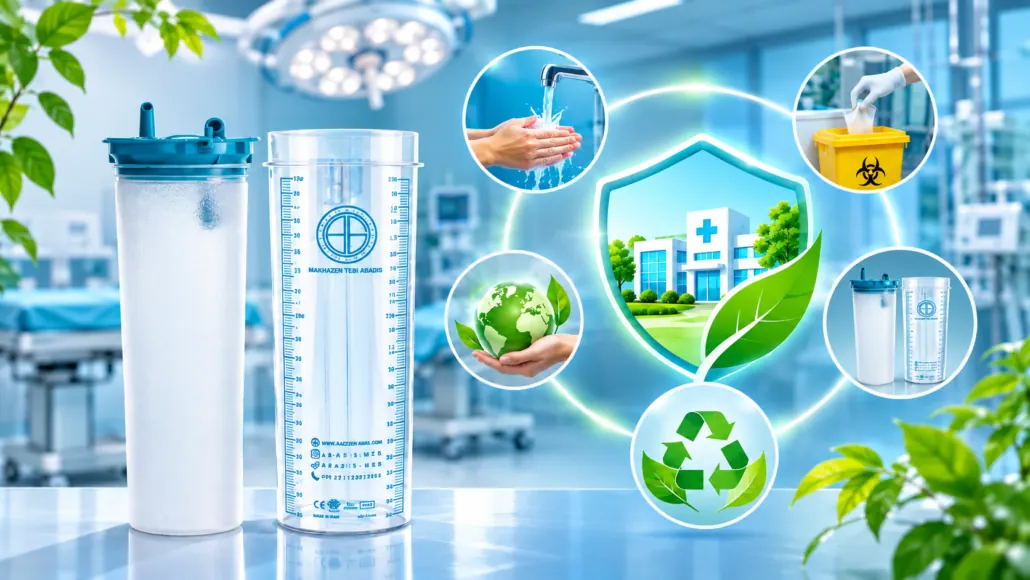
Its product portfolio includes disposable suction liner bags, suction canisters, suction tubing, and specialized filters.
These products are used in medical suction systems where suitable fluid collection, containment, and handling are important operational considerations.
When properly designed and used, compatible suction systems may help reduce certain opportunities for healthcare workers to come into direct contact with collected fluids.
However, any specific infection prevention or environmental performance claim must be supported by appropriate evidence.
Beyond medical device manufacturing, ABADIS MED pursues environmental and social responsibility initiatives, including activities associated with the restoration of the Zagros ecosystem and organizational sustainability.
Such initiatives reflect the broader importance of environmental responsibility within the healthcare supply chain.
At the same time, environmental activities and the infection prevention performance of medical devices should be evaluated independently using appropriate indicators.
The development of reliable medical products, responsible manufacturing processes, and measurable sustainability objectives can support the healthcare industry’s contribution to the UN SDGs.
Practical Strategies for Sustainable Infection Control in Hospitals
Translating the Sustainable Development Goals into healthcare operations requires measurable actions and clearly assigned responsibilities.
1. Assess Existing Conditions
Healthcare facilities should begin by reviewing their infection prevention programs, water services, waste management practices, and medical device handling procedures.
Assessments should use reliable and appropriately collected data.
2. Define Organizational Responsibilities
Infection control committees, quality departments, biomedical engineering teams, environmental health personnel, and facility management should have clearly defined responsibilities.
Coordination between departments is essential for effective implementation.
3. Train Healthcare Personnel
Regular training should address hand hygiene, safe medical device handling, waste segregation, environmental cleaning, and occupational exposure prevention.
Practical training and competency assessments are especially important.
4. Select Medical Devices Based on Risk
Medical equipment should be selected according to clinical requirements, technical performance, compatibility, and applicable safety standards.
Procurement decisions should also consider product traceability and relevant documentation.
5. Monitor Performance Indicators
Hospitals should establish measurable indicators for infection prevention and environmental sustainability.
These indicators may include hand hygiene compliance, healthcare-associated infection rates, hazardous waste generation, and water consumption.
6. Analyze Results and Implement Corrective Actions
Monitoring data should be reviewed at predefined intervals.
When performance gaps are identified, healthcare facilities should investigate causes and implement corrective actions.
7. Use Digital Information Systems
Hospital information systems and business intelligence tools can support data collection, trend analysis, and management reporting.
However, dashboards alone do not improve infection prevention outcomes.
Their value depends on reliable data and effective operational decisions.
Suggested Performance Indicators for Sustainable Infection Control
| Performance Indicator | Management Purpose | Related SDG |
|---|---|---|
| Healthcare-associated infection rate | Monitor infection prevention outcomes | SDG 3 |
| Hand hygiene compliance | Assess adherence to IPC procedures | SDGs 3 and 6 |
| Water consumption per occupied bed-day | Monitor water efficiency | SDG 6 |
| Hazardous waste per occupied bed-day | Evaluate waste generation | SDG 12 |
| Correct waste segregation rate | Assess waste management practices | SDGs 3 and 12 |
| Occupational exposure incidents | Monitor healthcare worker safety | SDG 3 |
| Energy consumption per unit of healthcare activity | Evaluate energy efficiency | SDGs 12 and 13 |
| Staff IPC training coverage | Monitor workforce preparedness | SDG 3 |
For meaningful comparisons, each indicator must have a clear definition, consistent data collection method, and appropriate denominator.
For example, certain device-associated infection rates should be calculated using the relevant device-days rather than simply the number of hospitalized patients.
The Global Infection Prevention and Control Agenda Through 2030
The World Health Organization adopted a Global Action Plan and Monitoring Framework on Infection Prevention and Control for 2024–2030 [6].
This framework aims to strengthen infection prevention at both national and healthcare facility levels.
It emphasizes effective IPC programs, workforce training, improved infrastructure, monitoring, and collaboration among relevant stakeholders.
The framework also recognizes the connection between infection prevention, antimicrobial resistance, and healthcare quality.
A key principle is that infection prevention should be managed as an ongoing organizational system rather than a collection of temporary interventions.
This approach aligns closely with the long-term objectives of sustainable development.
Conclusion
The United Nations Sustainable Development Goals and healthcare infection prevention programs are closely interconnected.
Safe healthcare delivery depends on reliable access to clean water, adequate sanitation, appropriate medical equipment, and effective waste management systems.
At the same time, sustainable healthcare requires balancing patient safety, healthcare worker protection, and environmental responsibility.
WHO and UNICEF reports demonstrate that important infrastructure gaps remain in healthcare facilities worldwide.
Addressing these challenges requires evidence-based infection prevention programs, suitable medical devices, workforce training, and measurable performance indicators.
The medical device industry can also contribute through improved product design, quality management, risk management, and responsible resource consumption.
Ultimately, a safe and sustainable hospital is one that protects patients and healthcare workers while systematically reducing preventable environmental impacts.
Scientific References
[1] World Health Organization (WHO). Global Report on Infection Prevention and Control 2024. Published November 29, 2024.
https://www.who.int/publications/i/item/9789240103986
[2] World Health Organization & UNICEF. Progress on Water, Sanitation, Hygiene, Environmental Cleaning and Waste Management in Health Care Facilities 2015–2025. Published August 18, 2026.
https://www.who.int/publications/m/item/progress-on-water–sanitation–hygiene–environmental-cleaning-and-waste-management-in-health-care-facilities-2015-2025
[3] World Health Organization (WHO). Health-care Waste. Fact Sheet. Updated October 24, 2024.
https://www.who.int/news-room/fact-sheets/detail/health-care-waste
[4] World Health Organization & UNICEF. Universal Water, Sanitation, Hygiene, Waste and Electricity Services in All Health Care Facilities to Achieve Quality Care: Global Framework for Action 2024–2030. 2024.
https://www.who.int/publications/i/item/9789240095366
[5] World Health Organization & UNICEF. Water and Sanitation for Health Facility Improvement Tool (WASH FIT), Second Edition.
https://www.unicef.org/documents/who-unicef-water-and-sanitation-health-facility-improvement-tool-wash-fit
[6] World Health Organization (WHO). Global Action Plan and Monitoring Framework on Infection Prevention and Control, 2024–2030.
https://www.who.int/teams/integrated-health-services/infection-prevention-control/draft-global-action-plan-and-monitoring-framework-on-ipc
[7] World Health Organization (WHO). Guidelines on Core Components of Infection Prevention and Control Programmes at the National and Acute Health Care Facility Level. 2016.
https://www.who.int/publications/i/item/9789241549929
[8] UNICEF. WASH in Health Care Facilities: Data and Global SDG Monitoring.
https://data.unicef.org/topic/water-and-sanitation/wash-in-health-care-facilities/
[9] Storr J, Twyman A, Zingg W, et al. Core Components for Effective Infection Prevention and Control Programmes: New WHO Evidence-Based Recommendations. Antimicrobial Resistance & Infection Control. 2017;6:6.
https://doi.org/10.1186/s13756-016-0149-9
[10] Centers for Disease Control and Prevention (CDC). WASH in Healthcare Facilities.
https://www.cdc.gov/global-water-sanitation-hygiene/prevention/